

877.247.2381
MON-FRI, 8AM - 5PM CST
MON-FRI, 8AM - 5PM CST

Category: Energy Efficiency
Compressed air can quietly consume more energy than a plant expects. Leaks, excessive pressure, restricted piping, poor compressor sequencing, and equipment running when production is idle all make the system work harder than necessary. For operations managers, improving compressed air efficiency is a practical way to control operating costs while protecting production reliability.
The best place to begin is usually not with a new compressor. It is with a clear picture of how the system performs now: when demand rises and falls, where pressure is lost, and how much air is being wasted. From there, a facility can prioritize repairs, pressure changes, controls, and equipment upgrades based on measured conditions, not guesswork.
A compressed air audit examines how air is produced, treated, stored, distributed, and used. Its purpose is to connect equipment performance with actual plant demand and identify practical opportunities for improvement.
Audit scope varies. The names used for audit levels are not universal, so the facility should compare what each proposal actually includes. A useful starting point is to distinguish among a walk-through, a measured assessment, and a comprehensive audit.
A walk-through is a practical first review. An auditor or facility team inspects the compressor room, major piping, dryers, filters, drains, receiver tanks, and high-demand applications. The review may note obvious leaks, equipment left running outside production hours, clogged filters, poor ventilation, and signs of pressure problems.
This stage can produce a prioritized list of questions and likely issues. It does not, by itself, establish a reliable energy baseline or prove how much a proposed change will save.
An assessment adds operating data to the visual review. Depending on the scope, it may include electrical power, system pressure, flow, compressor run status, and load patterns over representative production periods.
Those measurements can show whether a facility has a relatively steady demand or large swings. That distinction matters when evaluating compressor sequencing, storage, and VSDs. A pressure reading taken during one quiet moment is not enough to explain a system that serves multiple shifts and intermittent high-demand equipment.
A comprehensive audit considers the interaction between supply and demand. It typically reviews compressor performance, controls, leaks, air treatment, pressure losses, piping, storage, and end-use practices. The written findings should help operations leaders compare measures by expected energy impact, project cost, operational risk, and implementation requirements.
A useful audit deliverable may include:
The Compressed Air Challenge’s audit guidance explains why a sound audit should consider supply, demand, and the way they interact. Compressed Air Advisors also discusses demand-side issues in its article on solving pressure drop and other efficiency problems.
Summary: A walk-through can reveal obvious problems; measurements and a complete system view help determine what to fix first and how to verify the result.
Compressed air leaks are easy to overlook because they may not stop production. Yet each leak can increase compressor runtime and reduce the air available for productive work. A single inspection is useful, but a repeatable program is more effective over time.
Ultrasonic leak detection tools identify the high-frequency sound produced as compressed air escapes through an opening. They are useful in many operating environments because a technician can survey fittings, hoses, valves, and connections without relying only on hearing the leak directly. The JORC Locator-EV is one example of a tool designed for compressed-air leak surveys and maintenance work. Explore the JORC ultrasonic air leak detector.
A practical leak detection and repair cycle follows five steps:
A useful program keeps a simple log of the date found, location, repair date, responsible person, and verification result. Some facilities also estimate leak flow as part of an audit. Any estimate should state its method and assumptions; a sound-based detection result alone does not establish the exact annual energy cost.
Common mistake: Counting detected leaks as “savings” before the leaks are repaired and the system’s operation is reassessed. After repairs, compressor setpoints and sequencing may need review to ensure equipment is not continuing to operate as if the old demand still exists.

Ultrasonic leak detection equipment can help maintenance teams locate compressed-air leaks for repair and follow-up testing.
A variable speed drive adjusts a compressor motor’s speed to respond to changing air demand. This can be useful when demand changes substantially over time and the compressor can operate effectively across the required range.
A VSD is not automatically the most efficient choice for every facility. Suitability depends on the measured demand profile, compressor operating range, minimum speed, existing fixed-speed equipment, storage, controls, and the way the machines are sequenced. At very low demand, or when compressors are poorly coordinated, a VSD installation may not produce the expected result.
A VSD review should consider:
A common system arrangement uses one or more compressors to cover a relatively steady base load and a trim compressor to respond to changing demand. The best configuration depends on measured operating data and equipment capabilities. The variable-speed compressor collection provides examples of available equipment, while the rotary screw compressor collection includes fixed-speed options that may suit steadier loads.
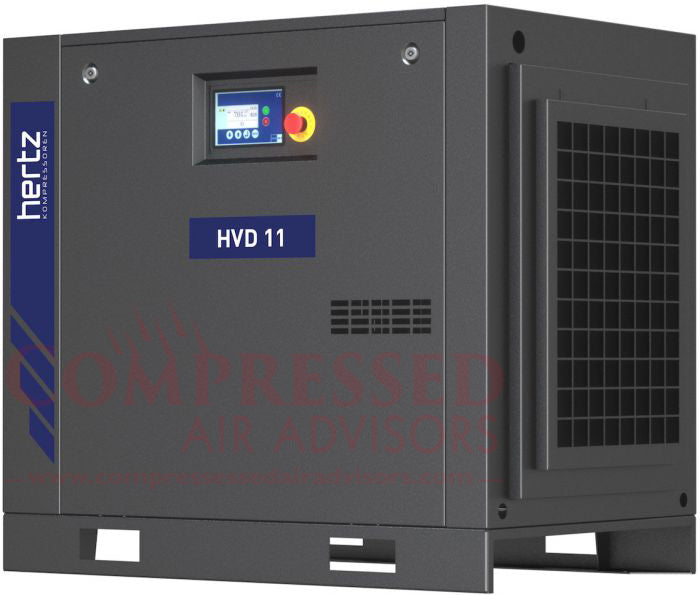
The Hertz HVD 11 is an example of a variable-speed compressor designed to adjust motor speed in response to changing air demand.
Summary: VSDs can be a useful energy measure when demand varies and the equipment is correctly sized and controlled. A load profile should come before a purchase decision.
Controls determine when compressors load, unload, start, stop, or change speed. In a multi-compressor system, poor sequencing can cause machines to compete, cycle unnecessarily, or run unloaded when their air is not needed.
A coordinated control strategy may assign roles to compressors, keep base-load machines operating in appropriate ranges, and use a trim machine to respond to fluctuations. A master controller can coordinate multiple compressors, but the correct solution depends on compatible equipment, system signals, and operating requirements.
Pressure/flow controllers can help separate compressor-room supply pressure from the pressure delivered to the plant’s demand side. These specialized pressure-regulating devices can maintain steadier downstream pressure as air demand changes. When properly selected and integrated with suitable storage and compressor controls, they may help reduce artificial demand and pressure fluctuations. Their suitability depends on the system’s operating requirements and design. The available compressed air flow controllers can be reviewed as one option, but system design should establish whether flow control is appropriate.
Controls should be evaluated alongside repairs and pressure optimization. Installing new control hardware without correcting leaks or understanding demand may simply make the compressors respond more quickly to avoidable consumption.
Higher pressure can increase compressor energy use and can also increase air consumption at unregulated uses, including leaks and open blowing. Industry guidance commonly uses a rule of thumb that, around a 100-psig system, a 2-psi increase in compressor discharge pressure may increase compressor energy by roughly 1%. The actual impact varies with compressor type, system conditions, and the equipment’s operating point.
The pressure at the compressor is not necessarily the pressure required at every tool. Filters, dryers, separators, piping, hoses, and fittings all contribute to pressure drop (the reduction in pressure between the source and point of use). Raising the entire system setpoint to solve a local restriction can increase energy use without fixing the restriction.
A careful pressure optimization process is more reliable:
A facility should not reduce pressure below what its equipment and process require. Final operating settings should be verified with the compressor and end-use equipment manufacturers or a qualified compressed-air professional.
A receiver tank stores compressed air and can help manage short bursts of demand or reduce pressure fluctuations. It is not a substitute for adequate compressor capacity, and adding a tank does not automatically reduce energy use. Its value depends on where it is installed, how much storage is needed, and what demand event it is intended to support.
A well-designed distribution system also limits unnecessary pressure loss. Undersized or poorly laid-out piping, restrictive fittings, and long runs can make air delivery less stable. Properly sized headers, suitable drops, isolation valves, and a ring-main arrangement may be considered as part of system planning. For retrofit or expansion work, the facility can review aluminum compressed-air piping options.
Condensate management belongs in the same review. A failed or neglected drain can affect treatment equipment and allow moisture to travel downstream. The condensate drain collection includes different drain types; the appropriate choice depends on the equipment, condensate load, pressure, and maintenance plan.
For related system context, see the Industrial Air Compressors Overview, The Complete Air Dryer Buying Guide, and the compressed air receiver storage tank collection.
Artificial demand is compressed air use that can be reduced without harming the production task. Common examples include leaks, open blowguns, poorly regulated blow-off, and equipment operating at a higher pressure than necessary.
Reducing artificial demand often requires input from operators and maintenance staff. They understand how equipment is actually used and can identify where a change might affect cycle time, product quality, or safety. Each proposed change should be tested against process needs.
Useful review questions include:
Pressure changes should not be used as a shortcut for correcting an end-use problem. Any change to production equipment or work practices should be reviewed for operational and safety requirements.
Compressors may continue running during breaks, weekends, or non-production hours because of leaks or equipment that remains connected. A facility can review operating schedules and identify when air demand is genuinely needed.
Potential measures include isolating unused areas, shutting down nonessential equipment under an approved procedure, and programming compressor controls for appropriate schedules. Before applying a shutdown strategy, the facility should consider processes that require continuous air, restart demand, pressure recovery time, equipment protection, and safety interlocks.
A useful baseline is a planned non-production period when production equipment is off. If compressors continue to run or cycle, the resulting behavior may indicate leaks, control settings, or equipment that has not been isolated. Changes to shutdown procedures should be verified by operations and maintenance teams.
A facility can use measured power and its utility billing data to estimate energy costs. A simple starting calculation is:
Estimated energy cost = average electrical demand (kW) × operating hours × energy rate ($/kWh)
For example, if a measured improvement reduced average demand by 12 kW over 4,000 operating hours, and the applicable energy rate were $0.12 per kWh, the illustrative energy-cost reduction would be:
12 kW × 4,000 hours × $0.12/kWh = $5,760
This is a simplified example, not a savings promise. A utility bill may include demand charges, time-of-use rates, taxes, or other adjustments. Project savings should be calculated using the facility’s actual rates and documented assumptions. The result also depends on whether the measured reduction persists through representative operating conditions.
Utility rebates may be available for compressed-air audits, leak repairs, controls, or equipment upgrades, but eligibility and rules vary by provider and service territory. Before ordering equipment or beginning work, the facility should contact its local utility to check:
Rebate availability should be confirmed directly with the utility because programs and terms can change. Rebates can support a business case, but the project should still make sense based on measured operating needs and expected performance.
For facilities deciding how to reduce compressed air costs, a measured, staged approach can keep the focus on the causes of waste:
A compressed air system changes as production equipment, operating schedules, and piping change. Periodic review helps keep the energy plan aligned with current demand rather than conditions from the original installation.
Reducing compressed air energy costs begins with understanding how the system performs. Audits reveal where waste occurs; leak programs address avoidable demand; pressure and piping reviews help resolve losses; and correctly applied VSDs and controls can better match compressor output to real requirements. Storage and off-peak shutdown practices may also help when they are designed around the plant’s operating pattern.
Compressed Air Advisors provides equipment guidance for compressors, controls, dryers, drains, and piping. Operations teams can explore the linked resources or use the company’s service and repair information to ask about available support and service-area requirements. Important system changes should be verified against site measurements, manufacturer specifications, and qualified professional advice.
Whether you're dealing with air leaks, unnecessary compressor runtime, or uncertainty about your equipment setup, Compressed Air Advisors can help you explore the right equipment and next steps for your operation.
Contact Compressed Air Advisors
A facility should establish a baseline by reviewing compressor operation, demand patterns, and system pressure. A walk-through can identify visible issues; measurements help confirm what is happening during production.
The right schedule depends on the size of the system, operating conditions, and history of leaks. Regular surveys, combined with repair tracking and verification, help prevent leak programs from becoming one-time exercises.
No. VSDs can be useful when demand varies and the compressor can operate efficiently across the required range. The measured load profile, minimum speed, system controls, and other compressors all affect whether a VSD is appropriate.
Lowering unnecessary pressure can reduce energy use, but pressure should not be reduced below the requirements of critical processes. Pressure losses and end-use requirements should be measured before setpoints are changed.
A receiver can help manage short demand peaks and pressure fluctuations, but it does not automatically reduce energy use or replace adequate compressor capacity. Its size and location should match the demand event it is intended to serve.
Artificial demand is compressed air use that can be reduced without harming production. Examples include leaks, excessive blow-off pressure, and equipment operating at higher pressure than required.
Some utilities offer rebates for eligible audits, repairs, or equipment upgrades. Programs differ by utility and location, so facilities should verify current requirements and any preapproval rules directly with the utility.
A useful report should describe the system, document measurements and assumptions, identify leaks and pressure losses, and prioritize recommended actions. Where savings are estimated, the method and operating assumptions should be clear.
Operations teams can review compressor run status or power use during a planned non-production period. Continued operation may point to leaks, connected loads, or control settings that need further investigation.
Not necessarily. Leak repairs, pressure optimization, control adjustments, maintenance, and piping improvements may address waste without replacing the compressor. If replacement is being considered, measured demand and total system requirements should guide the decision.