

877.247.2381
MON-FRI, 8AM - 5PM CST
MON-FRI, 8AM - 5PM CST

Not building pressure means the air compressor runs but receiver pressure does not reach its normal operating pressure or control range, pressure falls unexpectedly, or the compressor cannot maintain adequate pressure during demand. A compressor may normally run unloaded or slow down when air demand is low. The issue is when the controls call for compressed air and the compressor does not respond as expected. Identifying that behavior before ordering parts helps narrow down the possible cause.
For operators, that gap shows up as tools that slow or stall, pneumatic equipment that faults out, and production that stops without a clear reason. For buyers, it can look like a compressor that is suddenly too small. In most cases the answer is found by reading tank pressure, confirming whether the compressor is loading, and working from the simplest causes toward the technical ones.
This guide covers faults at the air compressor and its package, along with checks that help distinguish compressor problems from downstream pressure losses. If receiver pressure is within its normal operating range but equipment still receives insufficient air, the problem may be in the distribution system. Our guide to diagnosing pressure drop in a compressed air system covers that situation in more detail.
Symptom. “Not building pressure” can describe three different behaviors, each pointing to a different troubleshooting path:
Receiver pressure does not reach the normal operating pressure or control range when air is required. The compressor may fail to load when commanded, produce less air than expected, or lose air as quickly as it produces it.
Receiver pressure rises normally but falls unexpectedly when demand is low or the compressor stops. Air may be escaping through a leak, open drain, or another faulty component.
Receiver pressure drops or recovers too slowly during production. Higher demand, air leaks, intake restrictions, or reduced compressor output may be involved. A compressor that runs unloaded or slows down when there is little demand may be operating normally.
Inspect. Read tank pressure from the controller display or the gauge rather than estimating it from sound or tool performance. If two gauges disagree, record both readings and note where each is located; either could be inaccurate, poorly positioned, or affected by its condition. A suitable compressed air pressure gauge can be part of a measurement plan, but a replacement must match the application.
Next. If receiver pressure remains within its normal operating range but equipment still receives insufficient air, investigate downstream pressure losses. If receiver pressure cannot reach or maintain the required operating range when the compressor is called to deliver air, continue with the troubleshooting steps below.
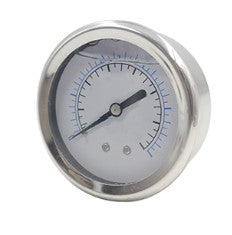
A reliable gauge reading, taken at a known location, is the starting point for any pressure diagnosis.
Symptom. The air compressor runs constantly and still cannot hold tank pressure, or it holds pressure when production stops and loses it as soon as equipment starts.
Inspect. Start with causes that do not require opening equipment. A new shift, additional equipment, or a process change can increase demand beyond the compressor's available output, even when the machine is operating normally. Air leaks continuously waste compressed air, while an open manual drain or a drain stuck open can prevent the receiver from building or maintaining pressure. A closed isolation valve downstream of the receiver creates a different problem: receiver pressure may reach its normal level, but the plant can still be starved of air because the valve restricts delivery. Check for visible or indicated operating abnormalities and confirm that the approved pressure settings match the compressor's operating requirements. Do not operate valves or adjust settings outside established procedures.
Next. If demand, leaks, and drains are ruled out, move to the load status of the air compressor. For condensate components, the condensate drain collection shows the drain types available, though a replacement still has to be matched to the system.
These checks are observational. Do not open a pressurized system, adjust safety devices, or work on energized equipment while investigating a suspected leak or valve fault.
Symptom. The motor runs, the air compressor is audible, but tank pressure does not climb.
Inspect. A running motor does not necessarily mean the compressor is delivering air. On a fixed-speed rotary screw compressor, the motor may continue running while the compressor is unloaded, even when there is little or no demand. A variable-speed compressor may slow down to maintain the required system pressure. On compressors using cut-in and cut-out controls, cut-in is the lower pressure at which the compressor is called to start or produce air, while cut-out is the upper pressure at which it stops or unloads, depending on the control design. Focus troubleshooting on a compressor that fails to load when there is a demand for compressed air. Observe the controller status, load indication, and pressure trend without opening the equipment. If the compressor receives a load command but does not respond, possible causes include the controls, pressure switch, sensor, unloader, solenoid, or pilot tubing.
Next. A machine that will not load points first to the control and load/unload sequence, not automatically to worn rings or valves. If the controller shows loaded status but tank pressure still does not rise, move on to the component checks in Step 4. Load status is displayed differently by model, so interpret it against the operating manual.
Safety Before Component Checks
Operators should limit troubleshooting to pressure gauges, controller readings, alarms, and external observations, with guards and panels securely in place. Do not open pressurized components, remove protective panels, or perform internal electrical or mechanical inspections while the equipment is operating. Internal checks, repairs, and testing must be performed by qualified technicians following the manufacturer's lockout/tagout, isolation, and depressurization procedures.
Never adjust, block, or defeat a safety relief valve or other protective device. Never install any valve between an air receiver and its safety relief valve
Symptom. Tank pressure will not reach cut-out pressure, or it bleeds down after the air compressor stops.
Inspect and next steps. The faults below can produce overlapping symptoms. Each entry gives the likely sign and where to look; none of them should be treated as a diagnosis until it has been confirmed against the machine. These are diagnostic possibilities, not instructions to replace parts on suspicion.

A packaged rotary screw air compressor such as this Chicago Pneumatic QRS 15 reports load status and pressure faults through its controller before any panel is opened.
Symptom. The pattern is still unclear after the first four steps, or readings suggest the air compressor and the plant are each behaving differently.
Inspect. Compare receiver pressure with point-of-use pressure while plant equipment is operating under normal demand. If receiver pressure drops below its normal operating range under load, possible causes include increased plant demand, air leaks, failure to load when commanded, or reduced compressor output. A compressor may fill its receiver when demand is low but still be unable to supply sufficient air during production.
If receiver pressure remains normal but pressure at the equipment is low, investigate pressure losses across the air dryer, inline filters, pressure regulators, isolation valves, and distribution piping. Restrictions, incorrect regulator settings, or excessive pressure drop can prevent equipment from receiving sufficient pressure even when the compressor is operating correctly.
Use installed gauges, controller readings, and approved monitoring points to compare pressures while equipment is running. Operators should not open pressurized components or perform internal inspections. Any additional testing or isolation must be performed by qualified personnel following the manufacturer's safety procedures.
Next. If receiver pressure is low under load, investigate air demand, leaks, compressor loading, and available output. If receiver pressure is normal but point-of-use pressure is low, check the dryer, filters, regulators, valves, and piping for pressure loss. These comparisons help determine where further diagnosis is needed before assuming the compressor or distribution system requires repair.
Before requesting parts or service, record:
This record separates a control problem from a supply-and-demand mismatch, a leak, a measurement error, or a mechanical fault. It also means any replacement part is checked against the air compressor model and serial number instead of being matched by appearance.
The time depends on the compressor model, receiver size, operating conditions, and the manufacturer's specified control range. A noticeable increase in the time required to reach normal operating pressure may indicate air leaks, restrictions, or reduced compressor output. Fixed-speed rotary screw compressors may normally run unloaded, while variable-speed compressors can slow down as demand decreases. Troubleshooting should focus on whether the compressor responds correctly when the controls call for air.
This pattern suggests that compressed air demand during production may exceed the compressor's available output. The compressor may fill its receiver when demand is low but still be unable to supply enough air when equipment is running. Compare receiver pressure and point-of-use pressure during normal production. If receiver pressure remains normal while equipment pressure falls, investigate downstream restrictions and distribution pressure losses. If receiver pressure also drops and cannot recover, investigate excessive demand, air leaks, loading problems, or reduced compressor output before assuming that a component has failed.
Do not raise the compressor's pressure setting simply to compensate for low pressure at a tool or piece of equipment. Low point-of-use pressure may result from restrictions or excessive pressure loss across the air dryer, filters, regulators, or piping, even when receiver pressure is normal. Increasing the compressor's pressure setting may place unnecessary stress on the equipment and does not address the underlying cause. Have a qualified technician diagnose the problem and confirm any necessary adjustments against the manufacturer's specifications and approved operating requirements. Cut-in and cut-out settings apply to compressors using those controls and should not be treated as universal operating requirements.
A compressor that is not building pressure cannot reach or maintain its required operating pressure when called to deliver air. Pressure drop refers to a reduction in pressure between two points in the compressed air system. If receiver pressure is normal but pressure at the equipment is low, investigate the dryer, filters, regulators, valves, and piping for restrictions or excessive pressure loss. If receiver pressure also falls under demand, investigate air consumption, leaks, and compressor output. Our pressure drop guide explains how to assess distribution losses.
Not necessarily. Noise alone does not identify a failed pump. Confirm load status, gauge accuracy, drains, and control response first, because several control-side faults produce the same symptom as mechanical wear.
As soon as the next step involves opening the pressure system, electrical diagnostics, drive or VFD work, internal components, or a safety device. Those tasks need qualified personnel following the manufacturer’s procedures and applicable safety requirements.
An air compressor that is not building pressure requires a systematic diagnosis. Start by observing receiver pressure, plant demand, air leaks, drains, and load status. Remember that a compressor may maintain normal receiver pressure while downstream equipment receives insufficient air because of a restriction or distribution pressure loss. Compare receiver and point-of-use pressure under operating conditions, and leave internal component checks to qualified technicians. Documenting pressure readings, operating conditions, and alarm codes helps identify the cause and supports accurate service and parts selection.
If the checks point to a component, having the air compressor model, serial number, tank pressure and cut-in/cut-out readings, and any alarm codes ready makes it faster to confirm the correct part. Contact Compressed Air Advisors with those details, or browse industrial air compressors if the machine is beyond economical repair and a replacement is being considered.