Description
Chicago Pneumatic QRS 10 150 TM 10 HP Rotary Screw Air Compressor, 120-Gallon Tank - PN 4152023171
Quiet, Continuous-Duty Compressed Air in a Complete Tank-Mounted Package
The Chicago Pneumatic QRS 10 150 TM Rotary Screw Air Compressor, part number 4152023171, is a complete tank-mounted compressed-air package engineered for dependable performance, quiet operation, and continuous-duty use.
Powered by a 10 HP motor, this fixed-speed rotary screw compressor delivers 31.2 ACFM at 150 PSIG and is mounted on a 120-gallon ASME air receiver tank. The large receiver provides compressed-air storage, helps stabilize system pressure, and supports short periods of increased air demand.
The Chicago Pneumatic QRS, or Quiet Rotary Screw, Series uses a single-stage, air-cooled, oil-injected rotary screw design. The package includes the rotary screw airend, main drive motor, air and oil systems, filtration components, oil cooler, aftercooler, cooling fan, belt-drive system, electronic controller, and receiver tank.
Unlike a traditional reciprocating compressor, the QRS 10 provides smooth, pulse-free airflow with reduced vibration and a sound level of approximately 65 dBA. Its enclosed design makes it an excellent choice for automotive shops, tire stores, maintenance facilities, body shops, paint shops, woodworking operations, fabrication facilities, and light industrial applications.
The tri-voltage motor can be configured for 208, 230, or 460-volt three-phase electrical service, allowing the compressor to accommodate many common commercial and industrial power systems.
Manufacturer Part Number: 4152023171
Key Features and Benefits
31.2 ACFM at 150 PSIG
Delivers higher-pressure compressed air for pneumatic tools, automotive equipment, production machinery, and other applications requiring operating pressures up to 150 PSIG.
10 HP Fixed-Speed Rotary Screw Compressor
The fixed-speed design provides consistent compressor output for facilities with steady or predictable compressed-air demand.
Continuous-Duty Operation
The oil-injected rotary screw airend is designed for continuous-duty operation when the compressor is properly sized, installed, ventilated, and maintained.
120-Gallon ASME Air Receiver Tank
The included receiver provides valuable compressed-air storage, helps reduce pressure fluctuations, and supports short periods of increased air demand.
Complete Tank-Mounted Package
The compressor and receiver are assembled into one compact package, reducing installation space and eliminating the need to purchase a separate air tank.
Quiet Enclosed Design
The low-sound enclosure limits operating noise to approximately 65 dBA, making the compressor significantly quieter than many open-frame reciprocating compressors.
ES4000 Basic Controller
The electronic controller provides straightforward monitoring and operation, including:
- Pressure and temperature readings
- Running and loaded-hour tracking
- Service warnings
- Element outlet temperature monitoring
- Warning and shutdown alarms
- Intelligent shutdown
- Automatic restart capability after a voltage interruption
Controller settings and automatic restart features should be configured according to facility safety requirements.
Tri-Voltage Three-Phase Motor
The motor can be configured for:
- 208 volts, three phase
- 230 volts, three phase
- 460 volts, three phase
- 60 Hz operation
Final voltage configuration and electrical installation should be completed by a qualified electrician.
Belt-Drive System
The belt-drive design provides reliable power transfer between the motor and rotary screw airend while allowing straightforward inspection and routine drive maintenance.
Integrated Aftercooler
The built-in aftercooler reduces compressed-air discharge temperature and helps condense moisture before the air enters the receiver tank and downstream air-treatment equipment.
Spin-On Service Components
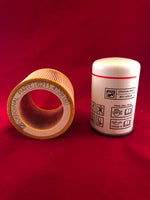
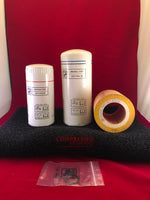
Spin-on oil filter and air-oil separator components simplify routine maintenance and help reduce service downtime.
Vibration-Isolated Assembly
Internal vibration isolation helps reduce vibration transferred to the receiver tank, floor, and connected piping system.
Standard Features
- Low-sound enclosure
- Continuous-duty operating capability
- Fixed-speed operation
- Load/no-load control with timed shutdown
- Single-stage rotary screw airend
- Oil-injected compression system
- Air-cooled design
- Belt-drive transmission
- ES4000 Basic controller
- Integrated aftercooler
- Spin-on oil filter
- Spin-on air-oil separator
- Oil sight glass
- Integrated oil cooler
- Cooling fan
- Emergency-stop control
- UL, cUL, and CSA-approved control panel
- NEMA 1 electrical protection
- Vibration-isolated compressor assembly
- Tri-voltage three-phase motor
- 120-gallon ASME receiver tank
- Tank-mounted configuration
Technical Specifications
| Specification |
Details |
| Manufacturer |
Chicago Pneumatic |
| Model |
QRS 10 150 TM |
| Manufacturer Part Number |
4152023171 |
| Compressor Type |
Oil-injected rotary screw |
| Operating Type |
Fixed speed |
| Drive Type |
Belt drive |
| Compression Stages |
Single stage |
| Motor Output |
10 HP |
| Rated Airflow |
31.2 ACFM |
| Rated Operating Pressure |
150 PSIG |
| Receiver Tank Capacity |
120 gallons |
| Receiver Certification |
ASME |
| Mounting Configuration |
Tank mounted |
| Voltage |
208-230/460V |
| Phase |
Three phase |
| Frequency |
60 Hz |
| Cooling Method |
Air cooled |
| Controller |
ES4000 Basic |
| Approximate Sound Level |
65 dBA |
| Integrated Aftercooler |
Yes |
| Integrated Refrigerated Dryer |
No |
| Electrical Protection |
NEMA 1 |
Recommended Applications
The Chicago Pneumatic QRS 10 150 TM is well suited for:
- Automotive repair shops
- Tire shops
- Fleet maintenance facilities
- Automotive dealerships
- Collision repair and body shops
- Paint shops
- Woodworking and cabinet shops
- Metal fabrication facilities
- CNC machine support
- Pneumatic assembly equipment
- Industrial maintenance departments
- Light manufacturing
- Small production facilities
- General industrial compressed-air systems
Air Treatment Recommendations
This compressor configuration does not include an integrated refrigerated air dryer. Although the built-in aftercooler helps reduce discharge temperature and condense moisture, additional air treatment is normally required to remove moisture, oil aerosols, and particulate contamination.
Depending on the application, the compressed-air system may also require:
- Refrigerated compressed-air dryer
- Moisture separator
- Automatic receiver-tank drain
- General-purpose particulate filter
- Coalescing oil-removal filter
- Pressure regulator
- Oil-water separator
- Point-of-use filtration
Applications involving paint spraying, CNC equipment, instrumentation, or moisture-sensitive production processes normally require additional drying and filtration.
The dryer and filters should be sized according to compressor airflow, operating pressure, inlet-air temperature, ambient conditions, and required downstream air quality.
Installation Considerations
The compressor should be installed indoors on a level, structurally adequate surface with sufficient space for ventilation, inspection, and routine maintenance.
Before installation:
- Confirm that the facility has 208, 230, or 460-volt three-phase electrical service.
- Verify that the total compressed-air demand is within the compressor’s 31.2 ACFM capacity.
- Confirm that piping and downstream equipment are rated for 150 PSIG operation.
- Provide adequate ventilation around the compressor.
- Prevent heated cooling air from recirculating into the compressor intake.
- Install the required electrical disconnect and overcurrent protection.
- Use properly sized compressed-air piping.
- Install a flexible connection between the compressor and rigid piping.
- Confirm that the receiver-tank drain is installed and operating correctly.
- Maintain the manufacturer’s recommended service clearances.
- Verify proper motor rotation during startup.
- Complete the manufacturer’s startup and warranty-registration requirements.
Electrical and mechanical installation should be completed according to Chicago Pneumatic’s instructions and all applicable local codes.
Routine Maintenance
Proper preventive maintenance helps protect compressor output, operating efficiency, temperature control, and equipment life.
Typical maintenance includes:
- Check the compressor lubricant level.
- Inspect and replace the intake air filter as needed.
- Replace the oil filter at the recommended interval.
- Replace the air-oil separator when required.
- Use Chicago Pneumatic-approved rotary screw compressor lubricant.
- Inspect belt condition and tension.
- Clean the oil cooler, aftercooler, and cooling surfaces.
- Inspect hoses, fittings, valves, and electrical connections.
- Check the receiver tank and condensate drain.
- Test the automatic condensate drain regularly.
- Inspect the compressed-air system for leaks.
- Keep the compressor room clean and properly ventilated.
- Follow controller service warnings and maintenance intervals.
Maintenance intervals may vary depending on operating hours, ambient temperature, humidity, dust levels, and installation conditions.
Warranty Information
Chicago Pneumatic rotary screw compressors include a standard manufacturer’s warranty. An extended warranty of up to five years may be available when the compressor receives an authorized startup and is maintained according to Chicago Pneumatic requirements using approved fluids and genuine replacement parts.
Warranty registration, authorized startup, maintenance documentation, lubricant requirements, and applicable coverage terms should be reviewed at the time of purchase.
Basic Troubleshooting
Compressor Cannot Maintain Pressure
Check for compressed-air leaks, an open condensate drain, a restricted intake filter, incorrect pressure settings, or downstream equipment consuming more than the available 31.2 ACFM.
Compressor Runs Hot or Shuts Down
Inspect room ventilation, ambient temperature, cooler cleanliness, lubricant level, intake restrictions, cooling-fan operation, and the possibility of heated air recirculating into the compressor intake.
Compressor Loads and Unloads Frequently
Check for air leaks, rapidly changing air demand, incorrect pressure settings, an open condensate drain, or air demand that is too low or inconsistent for the compressor.
Compressor Does Not Start
Check the electrical disconnect, incoming voltage, fuses, circuit protection, emergency-stop control, controller settings, and any active fault or shutdown condition.
Compressor Rotation Is Incorrect
Three-phase electrical connections may need to be corrected to achieve proper motor rotation. Disconnect power and have a qualified electrician correct the phase rotation before operating the compressor.
Excessive Moisture in the Air System
Check the receiver-tank drain and condensate-removal equipment. Install a properly sized refrigerated air dryer, moisture separator, and filtration system when dry compressed air is required.
Controller Displays a Warning or Fault
Record the warning or fault information and consult the operating manual. Do not repeatedly reset protective shutdowns without identifying and correcting the underlying cause.
Electrical repairs, internal pressure-system repairs, belt adjustments, and controller repairs should be completed by qualified service personnel.
Frequently Asked Questions
How much air does the Chicago Pneumatic QRS 10 150 TM produce?
The Chicago Pneumatic QRS 10 150 TM delivers 31.2 ACFM at 150 PSIG.
What is the manufacturer part number?
The manufacturer part number for this compressor is 4152023171.
What size air receiver tank is included?
This compressor is mounted on a 120-gallon ASME air receiver tank.
Does this compressor include a refrigerated air dryer?
No. This configuration does not include an integrated refrigerated air dryer. A separate dryer can be added when moisture removal is required.
Does the compressor include an aftercooler?
Yes. The integrated aftercooler helps reduce compressed-air discharge temperature and condense moisture before the air enters the receiver tank.
Is this a single-phase compressor?
No. This model requires three-phase electrical power.
What voltages can this compressor use?
The motor can be configured for 208, 230, or 460-volt three-phase power.
Can this compressor operate continuously?
Yes. The QRS rotary screw compressor is designed for continuous-duty applications when properly sized, installed, ventilated, and maintained.
How loud is the Chicago Pneumatic QRS 10?
The compressor has an approximate sound rating of 65 dBA, making it quieter than many open-frame reciprocating compressors.
What does the ES4000 Basic controller monitor?
The controller displays operating pressure, temperature, running hours, loaded hours, service warnings, and system alarms. It also supports intelligent shutdown and automatic restart functionality.
Can this compressor operate automotive air tools?
Yes, provided the combined air consumption of the tools operating at the same time does not exceed the compressor’s rated output of 31.2 ACFM.
Can this compressor be used for paint applications?
Yes, when properly sized. Paint applications normally require a refrigerated air dryer, coalescing filtration, and appropriate point-of-use air treatment.
What is the advantage of a rotary screw compressor?
A rotary screw compressor provides smooth airflow, reduced vibration, quieter operation, and longer operating cycles compared with many traditional reciprocating compressors.
What is the difference between fixed-speed and variable-speed operation?
A fixed-speed compressor runs its motor at a constant speed and loads or unloads according to air demand. It is generally best suited for facilities with steady or predictable compressed-air usage.
How do I determine whether 31.2 ACFM is enough?
Add the CFM requirements of all tools and equipment that may operate simultaneously. Include additional capacity for compressed-air leaks, periods of peak demand, and future growth.